The bar has moved - and most service businesses don't know it
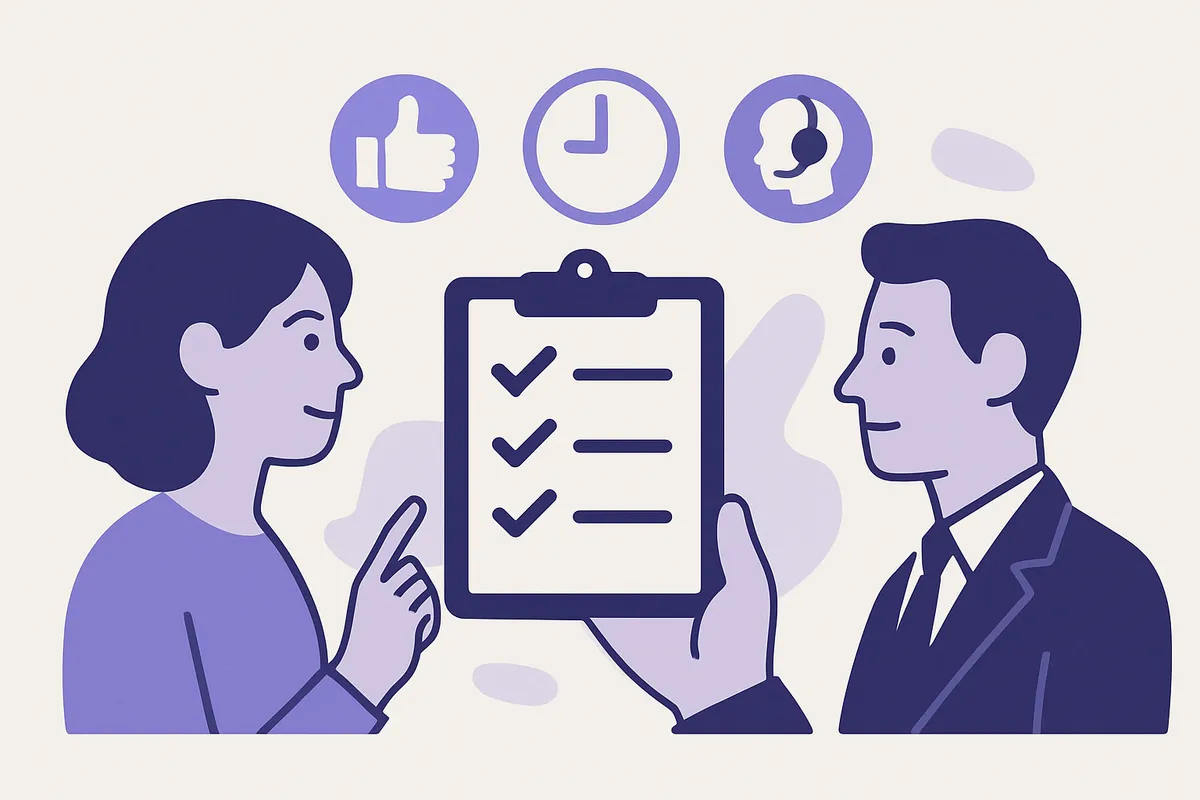
Something significant has shifted in how UK consumers judge the businesses they hire. Work quality still matters. But the experience around the work - how quickly you replied, how straightforward it was to book, whether you sent a reminder - now weighs almost as heavily as the job itself.
This isn't anecdote. Salesforce's State of the Connected Customer report (5th edition), which surveyed more than 13,000 consumers and business buyers across 29 countries in 2022, found that 88% of customers say the experience a company provides is as important as its products or services - up from 80% in 2020.
The expectation keeps rising. And the businesses most exposed to that shift are the ones that haven't changed how they operate.
Speed is now the first signal of professionalism
When someone submits an enquiry to your business, a timer starts in their head - even if they wouldn't consciously describe it that way. Research by HubSpot found that 90% of customers rate an "immediate" response as important or very important when they have a customer service question, and 82% when they have a sales or marketing enquiry. Almost two-thirds expect a response within 10 minutes.
Many small businesses take hours to respond to a new enquiry, and many don't respond at all on evenings and weekends, which is precisely when a large share of purchasing decisions get made.
The customer's interpretation of a slow reply isn't "they're probably busy." It's "this business doesn't take new enquiries seriously." That perception is set before they've ever seen your work.
Once a prospect hasn't heard back within the first hour, many have already moved on. They found someone else, got a quicker reply, and the job is gone - not because of your price or your skills, but because of the gap between enquiry and response.
Convenience is a baseline expectation, not a premium feature
For most of the last century, hiring a tradesperson or service business meant calling during working hours, waiting for a callback, and hoping someone answered. Customers accepted it because there was no alternative.
They have alternatives now. Almost everyone carries a smartphone, and a lot of local business research now happens on mobile, often outside of working hours.
A business that's only reachable via phone between 9am and 5pm is effectively invisible for much of the window when customers are actively making decisions. When someone gets home at 6:30pm and starts thinking about getting the boiler serviced or the bathroom retiled, they'll contact whoever is most accessible.
If your website has a working contact form, a visible phone number, and some way to make initial contact without a phone call, you're already ahead of a significant share of your local competition. That's a low bar - and most businesses still haven't cleared it.
Reviews are your first impression, not your last
98% of consumers used the internet to find information about local businesses in 2022, according to BrightLocal's Local Consumer Review Survey 2023, a survey of US consumers. Reviews are part of that search, often before anyone looks at your website or dials your number.
A business with three reviews - even three perfect ones - rarely inspires confidence. A business with 50 reviews averaging 4.7 stars looks credible before you've spoken a word.
But volume isn't the whole story. In the same BrightLocal survey, 88% of consumers said they're likely to use a business if the owner responds to all reviews - including critical ones - compared to one that doesn't engage at all. Responding signals that someone is running the business, paying attention, and cares what customers think.
Most small service businesses gather their first few reviews when they launch and then stop asking. The reviews that trickle in after that tend to skew negative, because dissatisfied customers are far more motivated to leave an unsolicited review than happy ones. The result is a profile that doesn't reflect the actual quality of the work.
Communication preferences are splintering
Fifteen years ago, the question was: phone or email? Today, customers expect to reach businesses through the channel that suits them, and that varies significantly by age, context, and urgency.
Text messages tend to get read quickly, while emails pile up. A booking reminder sent by text is far more likely to be seen. The same message sent by email might sit unread until after the appointment.
WhatsApp is increasingly used for initial business enquiries in the UK, particularly from customers who'd rather message than call. Many tradespeople now receive a meaningful share of new work through WhatsApp messages - which works in the short term, but creates problems: no paper trail, no follow-up system, and conversations buried under personal messages.
The point isn't that you need to be active on every channel. It's that if the only way to reach you is a phone call, you're inaccessible to a growing segment of customers who simply won't make that call.
The financial cost of falling short
Poor customer experience isn't just an abstract risk - it has a direct financial cost that most businesses absorb without ever quantifying it.
The cost shows up as customers who switched to a competitor, didn't return, or never completed an enquiry because something in the process let them down.
At an individual business level, the calculation is worth running. If your average customer relationship is worth £600 per year and you lose 12 customers annually because of slow responses, a neglected review profile, or an inaccessible booking process, that's £7,200 in revenue gone - not because of the quality of your work, but because the surrounding experience wasn't good enough.
Customers who have a poor experience rarely tell you why they left. They just don't come back.
What closing the gap actually looks like
The expectation gap isn't between what customers want and what's technically possible. Everything needed to meet modern expectations already exists and most of it isn't expensive. The gap is between what customers now expect and what most service businesses have actually set up.
Closing it typically comes down to a handful of practical changes:
Faster first response - even an automated acknowledgement that confirms receipt and sets an expectation ("we'll call you back within the hour") stops the customer from moving on while they wait.
Some form of out-of-hours contact - a contact form, a WhatsApp Business number, or a booking widget means enquiries at 7pm on a Sunday don't disappear entirely.
A consistent review strategy - asking every satisfied customer after the job is done, making it simple with a direct Google review link, and responding to every review that comes in.
SMS appointment reminders - reduces no-shows significantly and signals an organised, professional operation.
A second contact channel beyond the phone - most of the time, this just means monitoring a WhatsApp Business inbox alongside missed calls.
Individually, each of these is a small change. Together, they close the gap between the experience customers now expect and the one most small service businesses currently deliver. And because most competitors haven't made these changes either, the bar to stand out is lower than it looks.
Ready to automate the time-wasting parts of your business? Book a free consultation with ORYX.
Sources
- Salesforce State of the Connected Customer, 5th Edition (PDF) - Global survey of 13,000+ consumers and business buyers in 29 countries
- BrightLocal Local Consumer Review Survey 2023 - Survey of US consumers on how they use online reviews to evaluate and choose local businesses
- HubSpot Research: Live Chat Exposes a Fatal Flaw in Your Go-to-Market - Survey data on how quickly customers expect businesses to respond
Frequently asked questions
What are the key areas UK customers now expect service businesses to excel in?
UK customers expect service businesses to excel in speed of response, ease of booking, and building trust. A quick reply to enquiries and the ability to book services easily, often through digital platforms, are now seen as essential.
Why is speed of response so critical for service businesses today?
Speed of response is critical because customers expect near-instant replies. A delay, especially beyond an hour, can lead potential clients to assume a business isn't interested, and they may quickly move to competitors who respond faster.
How can service businesses meet the expectation for convenience?
To meet convenience expectations, service businesses should offer flexible, digital methods of contact, such as online bookings. Being available beyond traditional business hours can also help capture decisions made during evenings and weekends.
Ready to automate the time-wasting parts of your business?
Book a free consultation