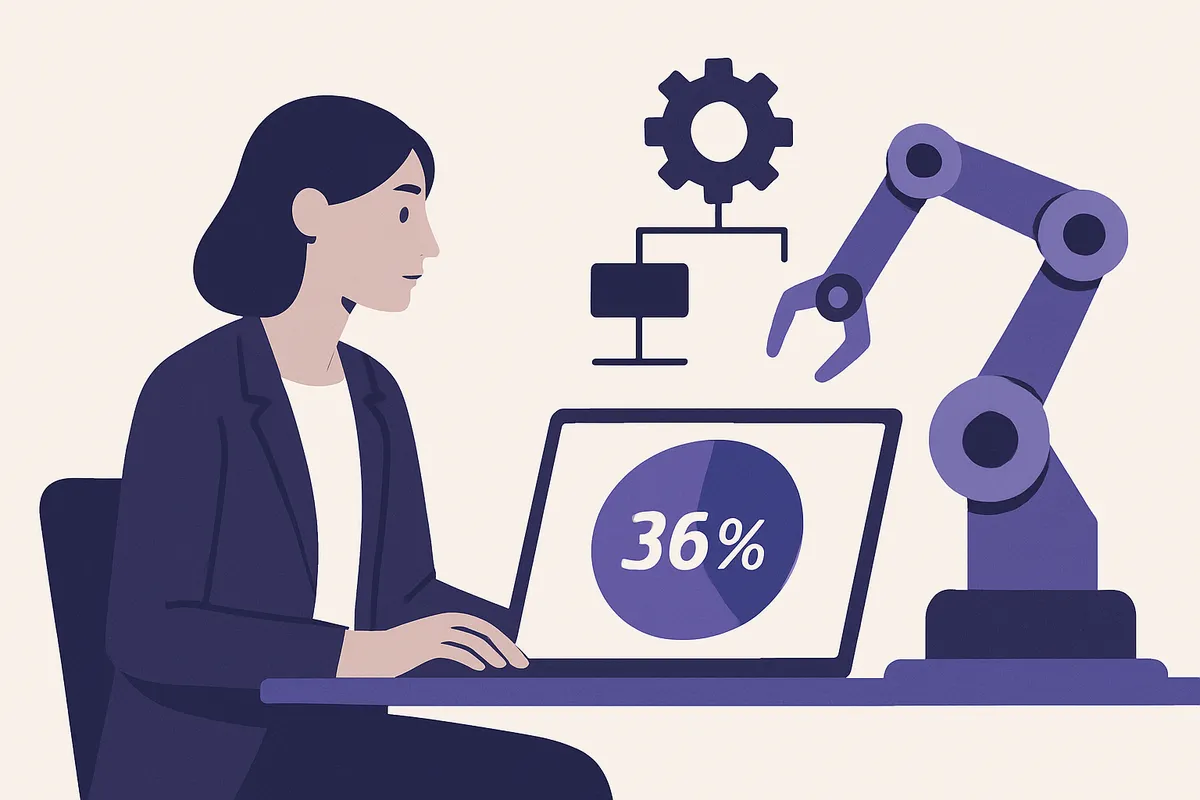
The Repetition Tax
Every day you run your business, a significant portion of what you do is the same as what you did yesterday. The same types of emails. The same kind of follow-up. The same data entry. The same scheduling. The same reporting.
McKinsey Global Institute's research on automation estimates that about half of all the activities people are paid to do could potentially be automated by adapting currently demonstrated technologies. For many business owners, that's a large share of the working day spent on tasks that a well-configured system could handle without human input.
For a business owner doing everything themselves, this isn't an abstract productivity statistic. It's a description of your Wednesday afternoon.
What "Repeatable" Actually Means
When researchers classify a task as automatable, they're looking at activities that follow a consistent pattern, involve structured data or predictable inputs, and don't require complex human judgement in each instance.
For a small business owner, that list tends to include:
- Responding to standard enquiries - "What are your prices?", "Are you available on X date?", "Do you cover this area?"
- Sending booking confirmations and reminders - the same message, personalised with name and details, every time
- Chasing invoices - the same sequence of reminders, triggered by a date, going to different people
- Updating records - moving information from one system to another after a job is completed
- Generating reports - weekly or monthly summaries built from data that already exists
- Posting to social media - regular content updates based on a schedule or trigger
None of these tasks require your expertise. They require your time. And that's the problem.
The Hidden Cost of Context Switching
Beyond the raw time spent, repetitive tasks carry another cost that rarely gets measured: context switching.
Every time you break from meaningful work to send a reminder email, log a booking, or update a spreadsheet, you lose momentum, and getting back into deep focus takes far longer than the interruption itself.
For a business owner who gets pulled into admin tasks ten or fifteen times a day, the productivity loss is severe - not just from the tasks themselves, but from the constant breaking and rebuilding of concentration.
What Gets Released When You Automate
When the routine work runs itself, something valuable happens. The time doesn't just sit idle - it gets reallocated, often without any deliberate effort, toward the higher-value work that actually moves the business forward.
When the repetitive tasks are automated, owners get back:
- More time for customer-facing work and relationship building
- More energy for strategic thinking and planning
- A reduction in the out-of-hours work that used to eat into evenings and weekends
- A clearer sense of what their business actually needs from them as a human
This isn't about doing less. It's about doing less of the wrong things.
Where to Start
The most useful first step is a simple audit: for one week, keep a rough log of the tasks you repeat. Not the complex or creative work - just the things that feel like admin, like maintenance, like filling in a form that's essentially the same every time.
At the end of the week, you'll have a clear picture of where your time is actually going. For most small business owners, the list is longer and more specific than they expected.
ORYX works with UK service businesses to map out exactly this kind of repetitive workload, then build automation systems that handle it - integrating with the tools you already use, configured to match the way your business actually operates. No generic software. No six-month implementation. Custom systems built around your business.
Source: Harnessing automation for a future that works - McKinsey Global Institute, 2017
Ready to automate the time-wasting parts of your business? Book a free consultation with ORYX.
Frequently Asked Questions
How much of a typical workday can be automated?
McKinsey Global Institute research (2017) estimates that about half of the activities people are paid to do could potentially be automated with currently demonstrated technologies. For owner-operators doing everything themselves, the repeatable admin share of the week is often large.
What kinds of tasks count as automatable?
Anything repeatable with a defined trigger and outcome: data entry, scheduling, invoice chasing, standard email responses, report generation. If you could write the steps down for someone else to follow, software can usually run them.
Why does context switching make repetitive work worse?
Every interruption to do a small admin task carries a re-focus cost on top of the task itself. Automating the interruptions doesn't just save the task time - it protects the deep work between them.
Frequently asked questions
What types of tasks in my business are typically automatable?
Automatable tasks often include responding to standard enquiries, sending booking confirmations, chasing invoices, updating records, generating reports, and posting to social media. These tasks follow predictable patterns and don't require complex decision-making.
How can automation help avoid the productivity loss caused by context switching?
Automation reduces interruptions by handling repetitive tasks in the background, allowing you to maintain focus on high-value work. This minimises the time you spend switching between tasks and helps maintain your concentration and workflow.
What should I consider before implementing automation in my business?
Evaluate which tasks are repetitive and time-consuming, and ensure they can be handled by existing technology without requiring human judgment. Assess the potential time savings and focus on automating the most routine tasks first to free up your schedule.
Ready to automate the time-wasting parts of your business?
Book a free consultation